Gyeongpo District
- Home
- Tour
- Nature Tour
- Gyeongpo District
-
-
Namhangjin Beach
A Quiet Secondary Beach Surrounded by Lush Pine Forests
Introduction
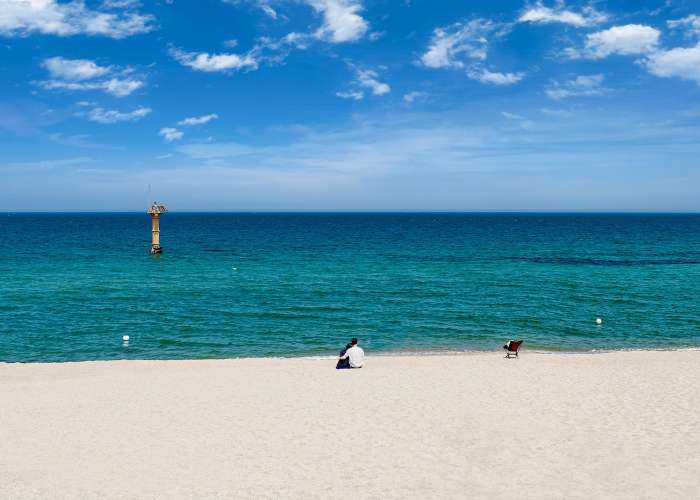
This is a small secondary beach featuring a 600-meter stretch of white sand covering approximately 24,000㎡. Namhangjin is a harbor located where Seomseokcheon Stream meets the sea at the estuary of the Namdaecheon River, on the eastern side of Gangneung. The name originates from its historical meaning as a ferry crossing located on the southern route from Songjeong to Hansongsa Temple. Around the beach, there are many raw fish restaurants, and the spacious parking areas nearby make it convenient for visitors to park.
Tourist Guide
Namhangjin Beach is renowned for its clear and emerald-blue waters. Though modest in size, it boasts a beautiful sea, making it a favorite destination among ocean enthusiasts. The surrounding area features dense pine forests and well-maintained guesthouses, making it an ideal place to relax quietly for a few days.
Travel Tips
It takes about 15 minutes by car from downtown Gangneung to reach Namhangjin Beach. If you search for quiet beaches in Gangwon State online, Namhangjin Beach is often listed as one of the hidden gems—known mostly to those who are familiar with the area. Locals in Gangneung tend to prefer Gangmun, Namhangjin, or Anmok Beach over Gyeongpo Beach.Namhangjin Beach is located near the entrance of Gangneung Airport and features a sandy shore approximately 1.5 km in length. The nearby dense pine forest adds to its cozy atmosphere. Its proximity to the city also makes it convenient to visit nearby attractions such as Ojukheon House, the Local History Museum, Gyeongpodae Pavilion, the Charmsori Gramophone & Edison Science Museum, and the Daegwallyeong Eoheulli Museum, making it an excellent vacation destination.Visitors can also enjoy the “Aranabi” zipline experience at Namhangjin Beach. “Ara” is a pure Korean word meaning “sea,” and the name reflects the idea of flying freely like a butterfly over the ocean. Aranabi is an activity open to all ages, allowing participants to glide through the sky and look down over the sea. It operates year-round, not just during summer. From a distance, the facility resembles a lighthouse, but up close, visitors can easily spot the Aranabi sign. At the entrance, there are instructions on how to wear and remove the equipment, which should be carefully reviewed before participation. The experience begins after crossing Solbaram Bridge to the opposite side.The zipline stretches approximately 560 meters across the sea, supported by wires that carry participants over the blue waters. Operating hours are from 10:00 AM to 5:00 PM. At the moment of departure, many visitors instinctively scream, but as they reach the middle and gain the courage to look down at the sea, those screams often turn into expressions of awe and admiration.The beach also features swings installed for visitors to relax. These swings have become a popular photo spot for travelers. Around the beach, there are numerous dining options, including raw fish restaurants, makguksu (buckwheat noodles), and flounder set menus. The wide parking areas also make it convenient for visitors arriving by car.With the growing popularity of camping, a pine forest camping area has recently been established in Namhangjin. It is located next to Gangneung Port—famous for its coffee street—separated only by a breakwater. At night, the nearby airport’s guiding lights illuminate the sea, creating a particularly beautiful night view. From Solbaram Bridge, located where the Namdaecheon River meets the sea, visitors can enjoy scenic views of the river.When visiting Namhangjin Beach, be sure to try Gangneung’s famous makguksu. Recently, the area has also gained attention as a popular venue for house weddings and hotel-class convention halls, further establishing itself as a notable destination.
-
-
Songjeong Beach
A place where you can enjoy a lush pine forest and a wide sandy beach
Overview
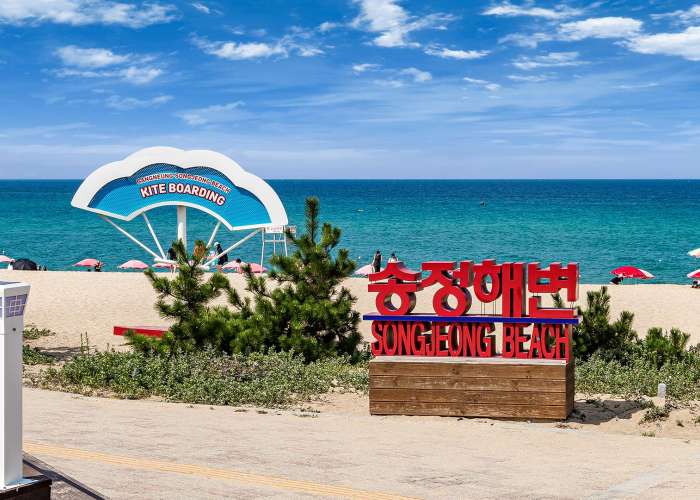
Located in Songjeong-dong, this beach features a 700-meter-long shoreline and a 28,000㎡ sandy beach. The surrounding pine forest is especially well known. According to legend, Choi Mun-han, the son-in-law of King Chungseok of the Goryeo Dynasty, brought eight pine trees from Songdo when he came to Gangneung and planted them here. The area was originally called “Palsongjeong” (Eight Pine Pavilion) and later became known as Songjeong.
Tourist Guide
Located in Songjeong-dong, the beach stretches 700 meters with a sandy area of 25,000㎡. The surrounding pine forest is famous. It is said that Choi Mun-han, the son-in-law of King Chungseok of the Goryeo Dynasty, brought eight pine trees from Songdo and planted them here, naming the place Palsongjeong before it became known as Songjeong. Nearby is the world’s largest Charmsori Gramophone & Edison Science Museum, where visitors can enjoy both a beach vacation and music appreciation. There are guesthouses available in the surrounding area, and for more accommodation options such as inns and hotels, visitors can stay in Gyeongpo or downtown Gangneung.
Travel Tips
Songjeong Beach, located between Gyeongpodae, Gangmun, and Anmok Beach, is a truly მშვიდ and cozy beach known for its photogenic scenery. It is convenient to reach by car, but also accessible by public transportation, taking about 20 minutes from the intercity bus terminal. Unlike other beaches, the entrance along the road features benches and a small snack stand, making it ideal for those on a drive to relax with a cup of tea or a drink while enjoying the sea, rather than for swimming. Pine trees line both sides of the coastal road, creating an excellent atmosphere. While driving is enjoyable, walking along the roadside is another way to enhance your travel experience. At the entrance of Songjeong Beach, there is a light green fence, which is expected to be removed soon as new facilities such as a management post, integrated surveillance cameras, and boundary lights are installed. Once removed, the beach will become even cleaner and more charming. Near the beach, there is a famous makguksu restaurant that the late Chung Ju-yung, founder of Hyundai Group, was known to visit whenever he came to Gangneung. There, you can enjoy both cold buckwheat noodles in broth (mul makguksu) and spicy mixed buckwheat noodles (bibim makguksu) to suit your taste. Pairing makguksu with buckwheat pancakes and locally brewed Gangneung makgeolli creates an exceptional dining experience.
-
-
Gangmun Sotdae Bridge
A bridge over the sea that marks the boundary between Gangmun Beach and Gyeongpo Beach.
Introduction
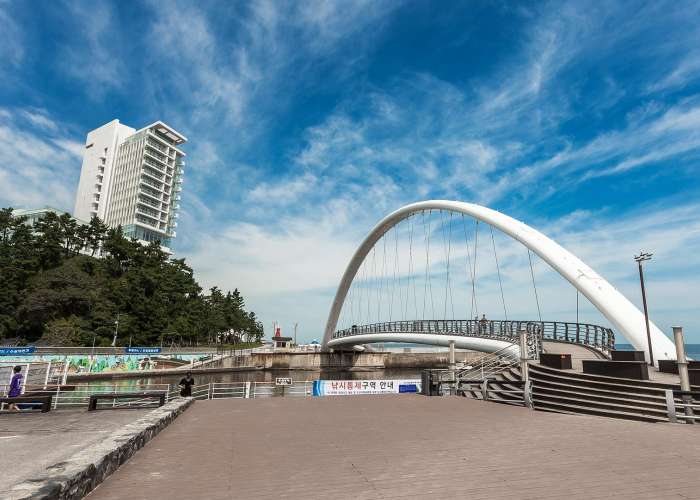
Gangmun Sotdae Bridge, located at Gangmun Beach in Gangneung, serves as the dividing point between Gangmun Beach and Gyeongpo Beach. The sotdae is said to have originated from a tall pole with a pouch containing rice seeds hung high, symbolizing prayers for a bountiful harvest. It was also used in rituals wishing for abundance, and as a symbol of folk belief, often with a carved wooden bird placed at the top of the pole.In Gangneung, this sotdae was traditionally called Jinttobaegi. In Gangmun, ritual ceremonies known as Seonangje are held three times a year—on the 15th day of the first lunar month, the fourth lunar month, and the eighth lunar month. It is believed that Jinttobaegi assists the village guardian deity, protects against the three disasters (flood, fire, and wind), and brings peace, abundant fishing, and a rich harvest to the village.
Tour Guide
Looking at the structure rising from the water beneath Gangmun Sotdae Bridge, you will see three birds facing different directions; visitors often make wishes here. Toward Gangmun Beach, you can spot a structure resembling an observatory. Crossing the bridge leads you to Gyeongpo Beach.As you walk along, you will also notice the nearby Seamarq Hotel, known for its excellent views. Through the trees, a triangular tiled-roof house can be seen—this is said to be the shrine where the Seonangje ritual is held. On the opposite side of the shrine, the water flows calmly like a quiet bay or lake. When viewed on a map, seawater appears to be enclosed between two bridges, forming a lake-like landscape.
Travel Tips
At the corner where Gangmun Beach begins, there is a well-known restaurant in Gangneung called “Paul & Mary,” famous for its handmade burgers. Since there are often many customers waiting in line, it is recommended to visit early.Additionally, along Gangmun Beach, there are several frame-shaped photo zones where visitors can take pictures, making it a great place to capture memories. Especially when seen up close, the scenery of Gangmun Sotdae Bridge offers an exotic atmosphere that is rare to find in Korea. Despite its strong local identity reflected in the name Jinttobaegi, the bridge also features structures reminiscent of European-style sculptures, making it a destination worth visiting at least once.
-
-
Happyeong Beach
A white sandy beach emerging as a surfing hotspot
Introduction
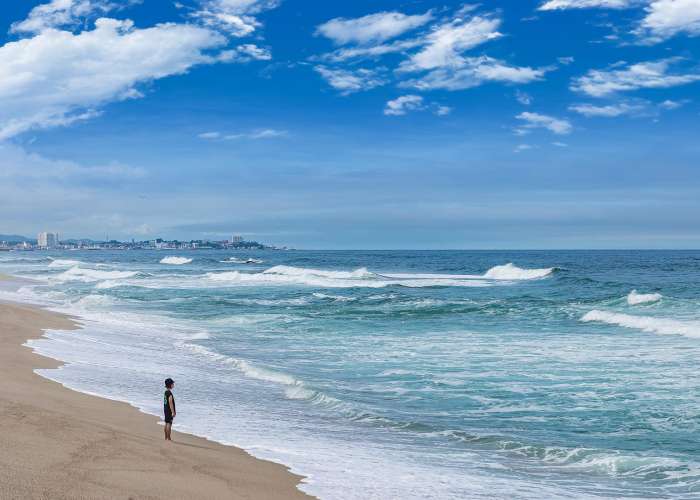
Located in Happyeong-ri, Sacheon-myeon, this beach features a 200-meter-long white sand shoreline covering 4,000㎡. The name “Happyeong-dong (荷坪洞)” originates from Heo Bong, the second son of Heo Yeop of Chodang, who once lived in this area, and the place was named after his pen name. The beach connects to Dwitbul Beach, forming a stretch of white sand, while a wide pine forest spreads out behind it. Known for its tranquility and cleanliness, it is a popular destination for families. In front of the beach stands Haedari Rock (Sea Dog Rock, 海狗), named after the seals that were said to have lived on it in the past, whose cries were reportedly heard even in nearby villages. Visitors can enjoy guesthouse accommodations, and numerous raw fish restaurants offer fresh seafood delicacies.
Tourist Guide
“Happyeong Beach” is directly connected to Sacheonjin Beach and is the northernmost beach in Sacheon-myeon. With a road running right along the seaside, it is an ideal spot for scenic drives. The surrounding area offers a variety of pensions for accommodation and excellent restaurants for dining, providing plenty of activities to enjoy. In particular, the area is famous for its many well-known cafés, making it a favorite destination for coffee lovers.
Tour Tips
The name Happyeong comes from Heo Bong, the second son of Heo Yeop of Chodang, who once resided here, and the area was named Happyeong-dong after his pen name. In front of the beach lies a large rock known as Haedari Rock, named because seals once inhabited it, and their cries were said to reach nearby fishing villages. Located in Happyeong-ri, Sacheon-myeon, the beach features a 200-meter-long white sandy shore covering 4,000㎡. Connected to Dwitbul Beach, it offers a wide expanse of white sand and a backdrop of lush pine forests, making it a clean and peaceful destination favored by families. The area has many pensions for overnight stays and numerous raw fish restaurants where visitors can enjoy fresh sashimi. Recently, it has become a popular destination for surfers, attracting many surfing enthusiasts. With famous cafés and a nearby mulhoe (cold raw fish soup) village, it is also an excellent destination for a culinary यात्रा.
-
-
Gangneung Port
A Comprehensive Tourist Fishing Port Filled with the Aroma of Coffee
Introduction
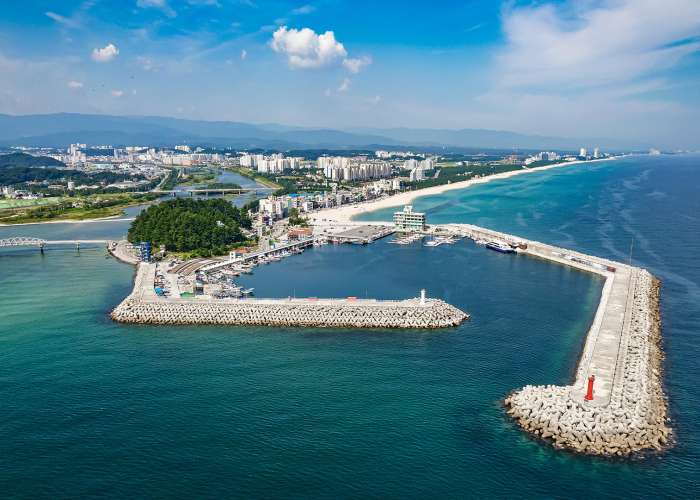
Gangneung Port is a harbor located in Songjeong-dong, Gangneung-si, Gangwon State. Until May 2008, it was known as Anmok Port before being renamed. Until the late Joseon Dynasty, it was an island called Gyeonjo-do, but it has since become a tied island connected to the mainland. Situated at the lower reaches of the Namdaecheon Stream, one of Gangneung’s major rivers, the port is characterized by its sandy beach. It is an excellent fishing spot where species such as salmon trout, mullet, anchovy, and mackerel are commonly caught. In addition, squid, flounder, and octopus are harvested along the coast.
Tourist Guide
As Gangneung Port is a popular fishing destination, a ritual for a good catch is held every year on March 3 and September 9. At the entrance of the beach once stood ChamSori Gramophone Museum, the only gramophone museum in Korea and home to the largest collection of Edison’s inventions, but it has since relocated to Gyeongpo-daero. In 2010, as part of the multi-functional fishing port development project led by the Ministry of Agriculture, Food and Rural Affairs to revitalize the fishing village economy, the Gangneung Port Fishing Village and Harbor Complex Space Development Project was completed. Facilities such as Solbaram Bridge, the Jukdobong circular road, cruise ships, and a nearby Coffee Street have been established. Recently, with the launch of passenger ferries operating between Gangneung Port, Ulleungdo Island, and Dokdo, it is now possible to make a day trip to Ulleungdo if you depart early from Seoul.
Travel Tips
Gangneung Port is very spacious and includes a passenger terminal. The surrounding roads are well paved with asphalt, allowing visitors to enjoy close views of the sea without stepping on sand. It is also widely known as one of the best fishing spots, attracting many anglers. Major catches include octopus and flounder. In spring, salmon trout are abundant, making it a favorite destination for seasonal fishing enthusiasts. To further develop and activate the area, the government created a Coffee Street nearby, which has gained immense popularity. Around the port, there are various raw fish centers where visitors can select seafood on the first floor and enjoy it on the second floor at relatively affordable prices. Recently, with the addition of ferry services to Ulleungdo and Dokdo, visitors can explore Gangneung Port and take a day trip to these islands with an early start. Anmok Beach is located nearby for those who wish to walk on the sand, making it easy to include in your itinerary. Gangneung Port is also considered an ideal destination for solo travelers. There is a seafood market where visitors can purchase fresh seafood as souvenirs while strolling around. Additionally, Gangneung Port features an activity called “Aranabi,” where participants are securely harnessed to a line connecting Gangneung Port and Namhangjin, gliding above the sea. The price is KRW 19,000 for a round trip and KRW 13,000 for a one-way ride. The nearby Coffee Street offers cafés with set menus, allowing visitors to enjoy coffee and cake together at reasonable prices. Each café has its own unique charm, so it is recommended to research in advance to find one that suits your taste. Imagining yourself enjoying fragrant coffee and sweet cake while gazing at the sea may inspire you to head straight to Gangneung Port.
-
-
Yongyeon Valley
A valley formed along the Sacheoncheon Stream between Cheonmabong Peak and Ungyebong Peak on the slopes of Hwangbyeongsan Mountain
Introduction
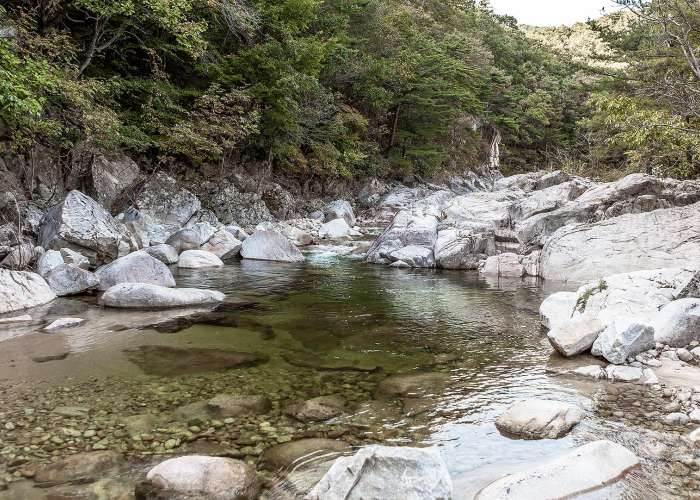
Yongyeon Valley is a 6 km-long valley located at San 1-0, Sagimak-ri, Sacheon-myeon, Gangneung-si, Gangwon State. The valley and its surrounding area are collectively designated as a nationally recognized geological heritage site. The valley follows the Sacheoncheon Stream flowing between Ungyebong Peak (530 m above sea level) and Cheonmabong Peak (1,015 m above sea level). The pools within the valley are called “Yongso (Dragon Pool)” due to a legend that a dragon once lived here and ascended to the heavens. The area features diverse fluvial landforms, offering significant geological and geomorphological value. It is also historically important, with nearby Buddhist ceremonies held at Yongyeonsa Temple and traditional ancestral rites performed at Yongso.
Tourist Guide
In addition to its clear flowing waters, Yongyeon Valley features Sagimak Reservoir. Further inside lies Yongyeonsa Temple, a temple established during the Silla Dynasty. The creation of the reservoir led to the disappearance of Yongyeon-dong Village. Above and below the reservoir, water flows through uniquely shaped rocks and wide flat bedrock, harmonizing with pine trees to create picturesque scenery that has long attracted visitors. During the summer, many vacationers gather on the wide rock surfaces below the reservoir to relax. On a tall rock nearby, the inscription “Gangneung Choi Clan Yongyeon Sejang-dong” is engraved.
Travel Tips
From Yongyeon Valley, you can easily reach one of Gangneung’s famous attractions, Daegwallyeong Sheep Farm, by car in about 30 minutes. On the way, stopping by Daegwallyeong Museum allows visitors to learn more about the region, enhancing the experience of the scenic Daegwallyeong area. After visiting the museum, you may also enjoy forest bathing at Daegwallyeong National Recreational Forest. Nearby, the Daegwallyeong Sheep Farm offers expansive grasslands and grazing sheep, providing a relaxing atmosphere. For those who enjoy more active tourism, skiing is available at Alpensia Resort and Yongpyong Resort.
-
-
Sacheon Port
A port where you can enjoy sea fishing on weekends
Introduction
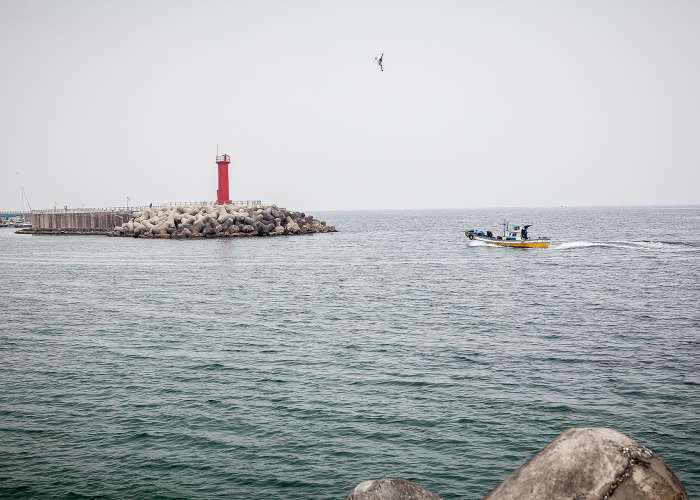
Sacheonjin Port is located at the confluence where Sacheoncheon Stream, which flows eastward from the watershed branching off the Baekdudaegan Mountain Range, meets the sea. As a relatively small port, the development of rocky coasts is limited, and facilities such as docking areas and piers are modest in scale. Unlike other ports, it is also well-suited for enjoying yachting. During the Joseon Dynasty, it was called “Sahwajin (沙火津).” Later, Sahwa-myeon was renamed Sacheon-myeon, and in 1916, during an administrative reorganization, Aeildang-ri, Haengkkaedeul, Geonneobul, Dwitseom, and Solmaji were merged to form Sacheonjin-ri. It was designated as a Class 1 fishing port in 1971, with development beginning in 1982 and completed in 1988. Approximately 70 households engage in fishing, catching flounder, sandfish, and octopus, while scallop farming is also actively carried out as a high-income industry.
Tourist Guide
Natural villages include Aeildang-ri, Haengkkaedeul, Neoneobul, Dwitseom, and Solmaji. The coastline of Sacheonjin is connected with nearby tourist attractions such as Gyeongpo, attracting many vacationers, and is home to Sacheonjin Beach. In Sacheonjin-ri, on the 6th day of the 2nd lunar month, residents gather at a bridge near the mouth of Sacheoncheon Stream to perform a traditional torch festival, praying for a bountiful harvest. The western boundary of Sacheon-myeon consists of mountainous terrain over 1,000 meters in elevation along the Daegwallyeong Range, and from these mountains, Sacheoncheon flows eastward through the central area, forming relatively wide plains. Major agricultural products include rice and leaf tobacco, with sericulture also being active. Sacheon Port and Sacheon Beach are located along Sacheoncheon Stream. A national road connecting Sokcho and Mukho passes through the area. In 1995, a hot spring was discovered in Seokgyo-ri.
Travel Tips
When you think of “Sacheon Port,” the first thing that comes to mind is “mulhoe” (spicy cold raw fish soup). Although it is a small fishing village without a large-scale seafood market or many sashimi restaurants, it is famous for mulhoe, attracting many visitors. People who visit Sacheon Port make sure to try mulhoe, and some even come specifically for it. The dish is served with slices of raw fish in a red chili paste-based broth, with noodles provided separately. When you add the noodles to the chilled broth and take a bite, the refreshing and spicy flavors awaken your senses instantly. As a result, there are more than ten restaurants specializing in mulhoe and hoe-deopbap (rice with sliced raw fish) facing the sea.Another must-try dish is rockfish seaweed soup (ureok miyeok-guk). It is on a completely different level from beef seaweed soup. There is no need to worry about any fishy smell; it is light and clean in taste, and with every spoonful, you will find yourself wanting more. If you visit Gangneung, it is highly recommended to try it at least once.Like many places along the East Coast, Sacheon Port becomes lively in winter with sandfish (yangmiri). When fishing boats return from the early morning sea, freshly caught sandfish flop in the nets spread across the market floor. Fishermen smile with satisfaction from a full catch, sweating even in the cold winter as they remove fish tangled in the nets. The freshly caught sandfish are auctioned immediately and distributed to markets. Grilling them over charcoal right away brings an indescribable joy, comparable to a heavenly experience. Sandfish has no fishy smell and tastes best when lightly salted and grilled over charcoal. Winter sandfish grilled over charcoal is highly recommended.Located near Gyeongpodae Pavilion, many visitors stop by Sacheon Port after visiting Gyeongpodae, making it more of a tourist port than a typical fishing village. From outside the southern breakwater, you can see the Gyeongpodae coastline. There is a small fish market, but it does not operate daily.At the Sacheon Yacht Stadium, used as a training ground for the Gangneung City Hall yacht team, national yacht athletes train and youth yacht academies are held, creating a spectacular view of yachts lined up across the sea. At the scallop direct sales center, you can purchase fresh shellfish at reasonable prices. Nearby are the site of Aeildang Pavilion and a literary monument dedicated to Heo Gyun, along with the scenic Gyeongpo Beach.