History-heritage
- Home
- Tour
- Cultural Tour
- History-heritage
-

-
Gyeongpo Area
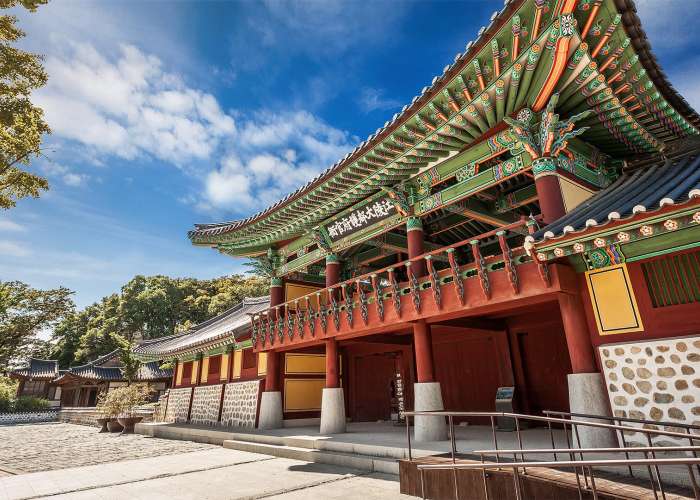
Gyeongpodae Pavilion
On the side is an arm shaped the gambrel roof house
Introduction
'Gyeongpodae Pavilion' represents one of Gangneung's scenic spots where it is located at Gyeongpo-ro, Gangneung-si, Gangwon-do, and it has been designated as the sixth Gangwon-do cultural asset. 'Gyeongpodae Pavilion' shows the Goryeo Dynasty's culture that mainly consists of 6 spaces in front, 5 spaces on the side, and 32 pillars.
Tourist guide
Near 'Gyeongpodae Pavilion' is the 'Gyeongpo Beach' and 'Gyeongpoho Lake', during new years at 'Gyeongpo Beach' there are many tourists who visit to see the sunrise, so it is highly recommended to reserve accommodations beforehand. Also, 'Gyeongpoho Lake' is close to 'Chodang-dong' where the 'Chodang Sundubu' is famous which is one of delicacy's of this area and is recommended for tourists to visit.
Tourist Tips
It is considered that King Chungsuk of Goryeo in year 13 founded 'Bakseuk' which is known as 'Banghaejeong' in the Anreumsa Temple of Gangwon-do and 'Inwolsa Temple' that was located in the back of the mountains, yet later the location has been said to have been moved but there is still no detailed evidence. At the 'Gyeongpodae Pavilion' it is known that Yulgok Yi I at age 10 built the 'Gyeongpo Daebu' which are letters of nouns such as the 'uhsaeji' of 'sukjong' and 'sangryangmun' of johamang. Here you can see 'Gyeongpo 8 gyeong' and 'Gyeongpo wolsam' that has been handed down to the great spectacle of a strong man.
-
-
Downtown
Gangneung Daedohobu
One of the oldest front gates of Gaeksa with great value
Introduction
It is a building site where government officials used to stay temporarily when visiting Gangneung during the Goryeo and Joseon Dynasty. According to the records from the Joseon dynasty, it was built in the 19th year of King Taejo of the Goryeo Period (936) and had 83 rooms inside. However, only the front gate of Gaeksa (national treasure no. 51) remains, which is one of the oldest building from the Goryo period. It also houses the tablet written by King Gongmin.
Tourist guide
According to the excavation investigation on the site for the construction of Gangneung City Hall building, it turned out that the site is a reservoir of data for research on building site of the government offices during the Goryeo and Joseon Dynasty. Also, Gangneung's local history book, Imyeongji deems it as a crucial area with historical significance that tells us history and culture of old Gangneungbu.
Tourist Tips
It was designated as the national historic site no. 388 on 11th July 1994, under the name of Site of Imyeonggwan Guesthouse, and then changed into Gangneung daedohobu Government Office on 27th November 2014. To the south, there is Gangneung Imyeonggwan Sammun (National treasure no. 51). Currently, the restoring construction of Jeondaecheong and Jungdaecheong is underway for excavation and autoradiographic investigation.
-
-
Downtown
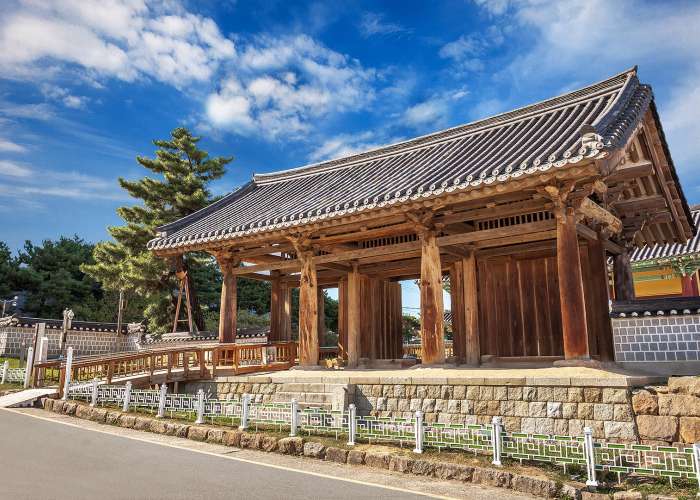
Imyeonggwan Sammun
National Treasure No. 51
Introduction
Imyeonggwan Sammun is one of the gates located in Yonggang-dong, Gangneung-si, Gangwon-do Province. It is a pride and a popular tourist attraction of Gangneung that was designated as National Treasure No. 51 in 1962. Its former name is Gangneung Gaeksamun Gate, and it began to be called Imyeonggwan Sammun in April 2010. Although the year of its construction is not known exactly, it is speculated to have been built in the early Joseon dynasty, based on the architectural style. It may be small in size, but it is considered a beautiful part of our heritage passed on by our ancestors that demonstrates the beauty and excellent structural characteristics of wooden buildings of Korea.
Tourist guide
The term, “gaeksa,” refers to a guesthouse where very important guests or visiting officials from the central government stayed in the past. Imyeonggwan Sammun is the name of the gate to such facility. The guesthouse in Gangneung where Imyeonggwan Sammun is found is a wooden building erected during the reign of King Taejo of Goryeo, and in recognition of its beautiful and elaborate architectural elements that are characteristic of the architectural style in the Goryeo dynasty, it was designated as National Treasure No. 51. The signboard seen today was actually handwritten by King Gongmin during his trip to Naksansa Temple. The gate is in jusimpo style, and such classical beauty and elaborate structure are not seen commonly in Korea. The entasis of the pillars are especially extreme, and it gives off an antique appearance overall. It is characterized by the less severe decorative characteristics. It is speculated that it was built earlier than the main hall (Daeungjeon) of Sudeoksa Temple. Only the gate remains today, and it is the oldest extant wooden building in Korea, excluding Buddhist temples and halls.
Tourist Tips
Imyeonggwan Sammun located in Imyeonggwan Guesthouse located in Gangneung, Gangwon-do Province was where important guests visiting Gangneung were wined and dined. Located close to the city center, it is a great place to visit for tourists coming to Gangneung. It is next to Gangneung Daedohobu (government office), which we also suggest that you visit. It is a building site where central government officials stayed during their visit to Gangneung from the Goryeo dynasty until the Joseon dynasty, and it used to be the administrative center of Gangneung. Unfortunately, however, most of it was damaged, except for Imyeonggwan Sammun and Chilsadang. Only the site remains today, but it is worth exploring as it retains the traces of the prosperous and brilliant history of Gangneung.
-
-
Downtown
Seongyojang House
Important Folklore Material No. 5
Introduction
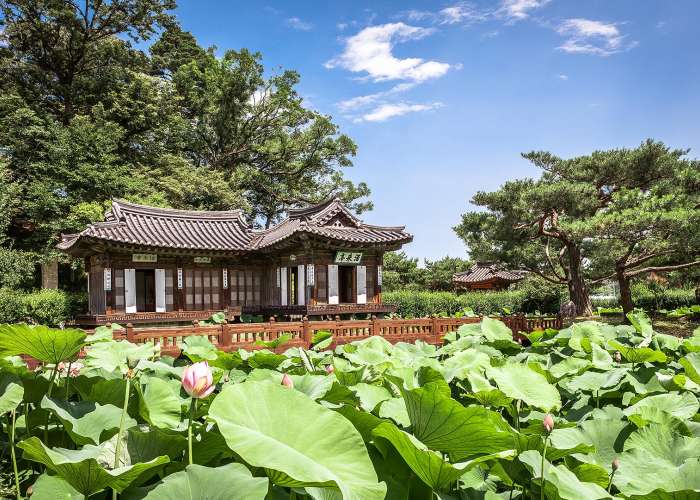
"Seongyojang House" is located at Unjeong-dong, Gangneung-si, Gangwon-do. It is a house where Lee Nae-beon, known as a noble family of Gangneung, lived first and his descendants also resided from generation to generation and designated as Important Folklore Material No. 5 now. "Seongyojang House" consists of "Yeolhwadang," "Main Building," "Dongbyeoldang," "Hwallaejeong," etc.
Tourist guide
"Seongyojang House" is a typical 99-part house of noble family. As a private upper-class house, it has been designated as national cultural property, continuing its reputation from generation to generation. This traditional house has been preserved well for about 300 years. This serves as a famous tourist attraction showing the house culture of the Joseon Dynasty in harmony with surrounding nature.
Tourist Tips
"Seongyojang House" serves as an important material not only for studying a building but also the residential life and culture of the Late Joseon Dynasty. In particular, its detached house "Yeolhwadang" is a tower-style building constructed on the three-storied rectangular stones, holding thousands of books and pictures such as "Yongbieocheonga Song" and "Goryeosa Record" and commanding a scenic landscape. "Hwallaejeong Pavilion" was built over an artificial pond inside "Seongyojang House" garden after "Yeolhwadang." Its entire walls consist of sliding doors with a lattice pattern. There is a tearoom for receiving guests, at a corridor connecting rooms and floors.
-
-
Gyeongpo Area
Heo Gyun and Heo Nanseolheon Memorial Park
Gangwon-do cultural property materials No. 59
Introduction
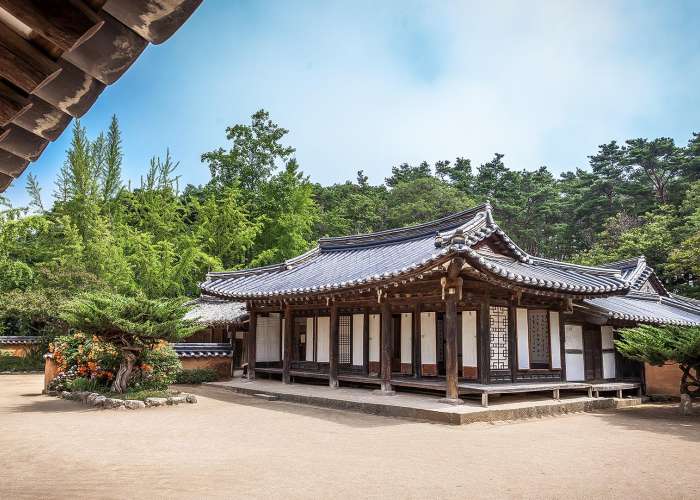
The Heo Gyun and Heo Nanseolheon Memorial Park, located at Chodang-dong, Gangneung-si, is a literature park to commemorate the brother and sister; Heo Gyun, who wrote "Tale of Hong Gil-dong," the first novel written in Korean language in the Joseon Dynasty, and Heo Nanseolheon, who is recognized as one of the best female writers then. It includes facilities including the Heo Gyun and Heo Nanseolheon Memorial Hall, the Traditional Tea Experience Center and a green park.
Tourist guide
This park consists of the Site of Birthplace of Heo Nanseolheon, the Heo Gyun and Heo Nanseolheon Memorial Hall and the Traditional Tea Experience Center. In the Site of Birthplace of Heo Nanseolheon, upon entering through a toll gate, there is a wide men's yard, inside which there is a square-shaped main building. Then, the main building is also divided into a main house and a detached house with a storeroom in between. The Heo Gyun and Heo Nanseolheon Memorial Hall is a single-story wooden building made of Korean roof tiles. Upon entering through a square-shaped passage, there is an information desk, and then a main exhibition room and a sub-exhibition room.
Tourist Tips
The Heo Gyun and Heo Nanseolheon Memorial Park is designed to support the innovative spirits politically or socially during the Joseon Dynasty, enhance the innovative ideas of Heo Gyun, who wrote "Tale of Hong Gil-dong," the first novel written in Korean language, and commemorate his sister Nanseolheon, Heo Cho-hui, who was a famous female poet then. In the park, there are the memorial hall, a status, a poetry monument, etc. including the Site of Birthplace of Heo Nanseolheon. Behind the birthplace site, there is a resting place with fantastic pine tree forests. This is the perfect place for families to come and have a healing time. Because it has less tourists, it may serve as a better resting place than Gyeongpodae Pavilion or other Gangneung tourist attractions. The Heo Gyun and Heo Nanseolheon Memorial Hall holds events like the Gyosan Cultural Festival and the Nanseolheon Cultural Festival in every Spring and Fall. In particular, the Nanseolheon Cultural Festival has gained popularity among many people by holding the Nanseolheon Tea Ceremony under the supervision of the Gangneung Council of Women. As one of the famous places in Gangneung-si, it is the perfect place for paying a visit among many people. It is also recommended to bring a cup of hot tea and walk into the pine tree forest of the Heo Gyun and Heo Nanseolheon Memorial Park.
-
-
Downtown
Samojung Park
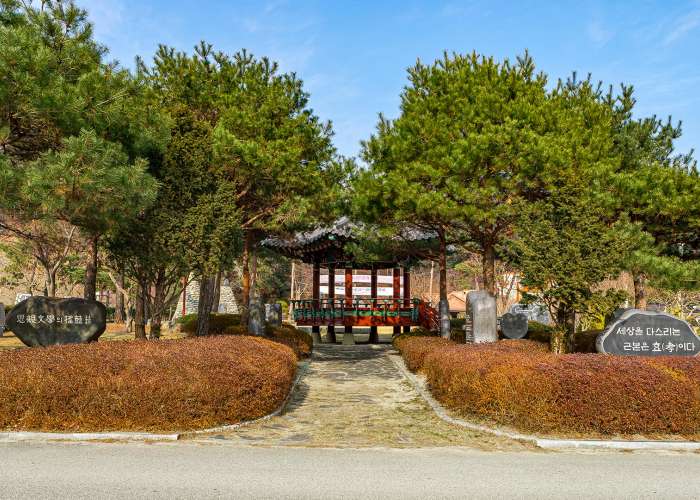
Samojung Park was established to emphasize filial piety and love as the fundamental values of humanity.
Introduction
Samojung Park was established to emphasize filial piety and love as the fundamental values of humanity. Samojung and the Filial Piety Park embody sentiments that honor mothers and the nostalgia of old hometown villages. The Samojung Pavilion is elegantly and traditionally designed, exuding a refined and dignified appearance, while the Filial Piety Park serves as a cultural space of high prestige. Notably, the park highlights the scholarship, artistic achievements, and filial devotion of prominent figures from the Gangneung region, such as Shin Saimdang and Yi Yulgok, solidifying its status as a birthplace for promoting the globalization of filial piety.
Tour guide
In the southern area of Filial Piety Park, Samojung Pavilion, poetry monuments, and sculptures are arranged, while along the northern edge, stone engravings and poetry monuments honoring the filial deeds of the "Filial Spirit of Gangneung" residents are set up like a folding screen. Notably, stone inscriptions provide information commemorating the virtuous deeds of local figures Shin Saimdang and Yi Yulgok. Along the western edge of the park, two Motherly Love Towers have been erected.
